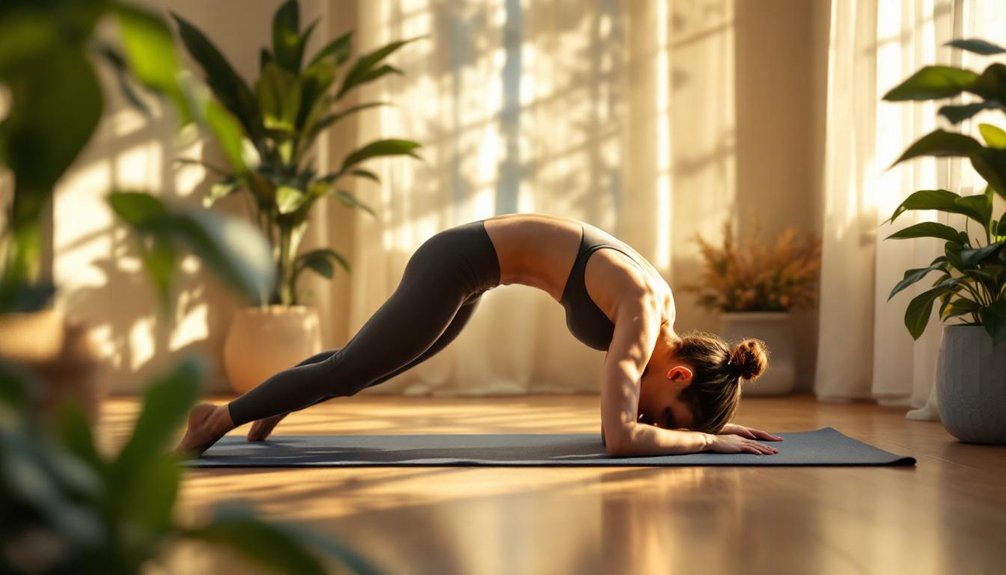
Top Tips for Enhancing Lower Back Flexibility
To enhance your lower back flexibility, start with essential stretches like the Cat-Cow and Child’s Pose to relieve tension. Incorporate strengthening exercises, such as planks and bridges, to support your back. Practicing yoga regularly can further improve flexibility and promote relaxation. Don’t forget to maintain good posture by engaging your core and taking breaks to stretch. Setting achievable goals can keep you motivated. Discover more ways to boost your flexibility and overall well-being ahead.
Key Points
- Incorporate daily stretches like Cat-Cow and Child’s Pose to gently release tension and improve flexibility.
- Strengthen core muscles with exercises like planks and bridges for better support and stability.
- Practice yoga regularly, focusing on poses like Downward Dog and Pigeon Pose to enhance flexibility.
- Maintain proper posture by aligning your spine and engaging core muscles during daily activities.
- Take frequent breaks to stand, stretch, and decompress your spine, promoting overall flexibility and well-being.
Understanding the Importance of Lower Back Flexibility
When you consider your overall well-being, lower back flexibility plays an essential role in how you move and feel daily. It directly affects your posture, balance, and even your energy levels.
With a flexible lower back, you’ll find it easier to engage in activities you love, from dancing to hiking. Plus, improved flexibility can help reduce tension and discomfort, making your day-to-day life more enjoyable.
Embracing this aspect of your health empowers you to break free from limitations, allowing you to explore new movements and experiences. Prioritizing lower back flexibility is a crucial step toward a more liberated, vibrant life.
Essential Stretches for Lower Back Flexibility: A Beginner's Guide
To enhance your lower back flexibility, incorporating essential stretches into your routine is key. Start with the Cat-Cow stretch, moving between arching and rounding your back.
Next, try the Child’s Pose to gently release tension. The Seated Forward Bend will help lengthen your spine and hamstrings. Don’t forget the Supine Twist for a soothing spine rotation.
Hold each stretch for 20 to 30 seconds, breathing deeply. Remember to listen to your body; only stretch as far as feels comfortable.
Strengthening Exercises to Support Lower Back Flexibility
Building strength in your core and back muscles is just as important as stretching for improving lower back flexibility. To liberate yourself from stiffness, incorporate exercises like planks, bridges, and bird-dogs into your routine.
These movements not only enhance muscle support but also improve stability. Focus on engaging your core while performing each exercise; this connection empowers your lower back. Start with low repetitions and gradually increase as you gain strength.
How to Incorporate Yoga for Enhanced Flexibility?
How can yoga enhance your lower back flexibility? By incorporating specific poses, you can release tension and increase mobility.
Start with gentle stretches like Cat-Cow and Child’s Pose, which warm up your spine. As you progress, try Downward Dog and Pigeon Pose; they target tight areas and encourage deep breathing.
Begin your journey with gentle stretches like Cat-Cow and Child’s Pose to warm your spine before progressing to Downward Dog and Pigeon Pose.
Aim for a consistent practice—15 to 30 minutes daily can make a difference. Listen to your body, and hold poses longer to deepen the stretch.
This mindful movement not only enhances flexibility but also liberates your spirit, allowing you to flow freely in everyday life. Embrace the journey!
Posture Tips to Improve Lower Back Flexibility
To boost your lower back flexibility, focusing on your posture is essential.
You’ll want to maintain a neutral spine alignment, engage your core muscles regularly, and practice mindful sitting habits.
These simple adjustments can make a big difference in how your back feels and moves.
Maintain Neutral Spine Alignment
Maintaining a neutral spine alignment is essential for enhancing lower back flexibility, especially since poor posture can lead to tightness and discomfort.
To achieve this, imagine a straight line from your head to your tailbone. When sitting or standing, keep your ears over your shoulders and your shoulders over your hips.
Avoid slumping or arching your back excessively; instead, engage your body’s natural curves. You’ll feel more liberated and less restricted.
Regularly check your posture throughout the day, whether at your desk or while walking.
With practice, you’ll find that a neutral spine supports both flexibility and overall well-being.
Engage Core Muscles Regularly
A strong core plays an essential role in supporting your lower back flexibility. When you engage your core muscles regularly, you create stability that allows your back to move freely.
Think of it as a protective shield; a well-developed core supports your spine and reduces strain. To engage your core, focus on tightening your abdominal muscles during daily activities, like standing or walking.
You’ll notice improved posture and a greater range of motion. By actively connecting with your core, you liberate your body from tension, paving the way for enhanced flexibility and a more fluid, confident movement through life.
Practice Mindful Sitting Habits
While you mightn't realize it, your sitting habits can considerably impact your lower back flexibility. To liberate yourself, focus on maintaining an upright posture.
Keep your feet flat on the floor, and align your knees with your hips. Use a chair that supports your lower back, or add a cushion for extra comfort.
Take breaks to stand and stretch, allowing your spine to decompress. Embrace mindfulness by being aware of how you sit; this awareness can transform your habits.
Incorporate Foam Rollers and Massage Techniques
To enhance your lower back flexibility, incorporating foam rollers and massage techniques can be incredibly beneficial.
Start by using a foam roller to target tense muscles along your lower back. Roll gently, allowing the pressure to release tight spots. You’ll feel the tension melt away, promoting freedom of movement.
Pair this with self-massage techniques—use your hands or a massage ball to apply pressure where you feel stiffness. Focus on areas that feel tight, and breathe deeply as you work through discomfort.
This combination will help you reclaim mobility, allowing your body to move freely and effortlessly throughout your daily activities.
How to Set Achievable Flexibility Goals?
Setting achievable flexibility goals can transform your lower back mobility journey. Start by evaluating your current flexibility level. Identify specific movements you want to improve, like bending or twisting.
Set realistic, measurable targets—like stretching for 10 minutes daily or achieving a certain range of motion in a month. Break these goals into smaller, manageable steps to keep you motivated. Celebrate your progress, no matter how small, and adjust your goals as you improve.
FAQs
Can Poor Flexibility Lead to Chronic Lower Back Pain?
Yes, poor flexibility can absolutely lead to chronic lower back pain. When your muscles and joints are tight, they strain your back. Stretching regularly can help you feel freer and reduce discomfort considerably.
How Often Should I Stretch for Optimal Flexibility?
You should stretch daily, but don’t just stretch—dance, leap, and revel in your movements! The more you embrace flexibility, the freer you’ll feel, releasing potential you never knew existed in your lower back.
Are There Dietary Tips to Support Flexibility Improvement?
Yes, you can support flexibility by eating a balanced diet rich in fruits, vegetables, healthy fats, and lean proteins. Staying hydrated and incorporating anti-inflammatory foods, like nuts and fish, helps your body recover and thrive.
What Are the Signs of Overstretching or Injury?
You’ll know you’ve overstretched if you feel sharp pain, swelling, or bruising. Listen to your body; if it’s painful to move, take a break. Healing is part of your journey towards greater freedom and flexibility.
How Does Hydration Affect Lower Back Flexibility?
Hydration keeps your muscles and joints lubricated, which enhances flexibility. When you’re well-hydrated, your lower back can move more freely, reducing stiffness and the risk of injury. So, drink up for better mobility!
In Summary
Incorporating these tips into your routine can make a significant difference in your lower back flexibility. With dedication and consistency, you’ll notice improvements that not only enhance your flexibility but also support your overall well-being. So, why not start today? Remember, every small step counts toward a more flexible and healthier you! Embrace the journey, stay patient, and watch your progress unfold. Your lower back will thank you for it!